Wednesday, May 28, 2008

Summer Assignments


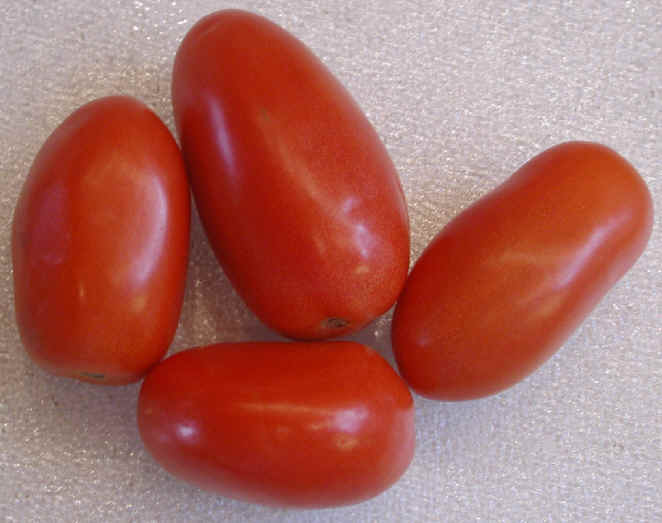
picture borrowed from: http://www.all-creatures.org/recipes/images/i-tomatoes-roma.jpg

This exercise was designed for Ashley who does not care for tomatoes, but it would be useful for any of you interested in tasting tomatoes anew.

Wait until August. Take two sun ripened tomatoes, preferably Roma and purchased at a farmer's market. Slice them thinly and place upon a plate. Slice a red onion very thinly. Break the slices into hoops and arrange on top of the tomatoes. Coarsely chop fresh basil and distribute over the top of the onions. Dress the tomatoes with drizzles of very good olive oil and balsamic vinegar. Sprinkle salt and pepper and if the vinegar is not already too sweet a pinch of sugar. Break up pieces of goat cheese over the top. Wait at least one hour until the cheese is not melty but sits atop the tomatoes like fluffy clouds. For the first bite, make sure you have a sample of all of these elements assembled on your fork. Afterwards, send me an email telling me whether or not you still do not like tomatoes.

Sunday, May 11, 2008

Food and Sociality … with Chickens!


(Jersey Giants, photo from http://www.hamandeggsranch.com)

I decided to have an egg this morning, only one. As usual when I decide to limit my breakfast to a single egg, I carefully selected one of Blackie’s eggs. Blackie is a Jersey Giant, a larger-sized hen with beautiful iridescent black plumage, and her eggs are easily identifiable as somewhat larger and paler in hue among the other brown eggs I get from my Rhode Island Red and Barred Rock. This morning it suddenly occurred to me how bizarre it would have been for me a year ago actually to know the chicken I was indebted to for my breakfast! We have discussed at great length in class the many ways in which food binds people to each other and the kinds of obligations that a gift of food can incur. Now when I open my back door, I hear a rising chorus of chicken sounds anticipating my arrival with a gift. For the last two days this has been the chopped up stalks of the collard greens we cooked in the evening class last Thursday. When I open the little door to the nesting box to check for eggs, it seems almost like a disruption of the cosmic balance of things if I don’t come bearing some sort of special treat, even if it is a handful of dandelion greens grabbed en route to the coop. The chickens relish these greens as a break from their organic feed, carefully calibrated to maximize egg laying, and their scratch, a mixture of corn and other grains calculated to add “interest” to their diet. The greens also intensify the beta-carotene in the eggs, which brings a direct benefit to me and my family when we eat these eggs as part of our diet. What the chickens don’t eat gets blended in the dirt floor of the coop along with chicken droppings and the shaved wood chips used as bedding and swept from the coop periodically, all of which, in the course of a month or two becomes an unbelievably rich compost for the garden, what Keith Possee calls “completing the circle.”

The American Bag Lunch as Nutritional Ideology


(photo found at askshifra.blogspot.com)

The Japanese Lunchbox Project reminded once again of how the classroom can become an ethnographic field site. In the blog entries on our kitchen activity, I discovered that the presence of a few guests from Japan yielded some important intercultural learning. Some of you commented on the bemusement on the part of the Japanese students at being asked such detailed and focused questions about the obentos their mothers made for them when they were in preschool. How could such a mundane everyday practice become the topic of such an avid interest on the part of non-Japanese? The experience caused many of you to reflect on your own experience of the bag lunches packed for you by your mother or other caregiver, and in a few cases, on your own practices of packing lunches for younger siblings or as a paid childcare worker. The items that would be assembled for the typical bag lunch for a primary school student were carefully catalogued, usually a mix of foods that would delicately insert the nutritional ideology of the mother into her child’s lunch: carrot sticks, apple slices, string cheese (read: vegetable material + protein). Alongside these would be other items more guaranteed to find favor: cookies, a fun-sized candy bar, a small bag of chips. The inclusion of a juice drink appeared to fall in-between these two categories: something sweet that also announced its nutritional value (10% real fruit juice!).

What this suggests to me (as a reader of these blogs but also as a veteran of packing many bag lunches for my two children) is a subtle struggle in a nutritional war between “real foods” and the highly commodified and heavily advertised foods that prove so alluring to children. However, this struggle over the “value” of foods did not end with the assembly of the bag lunch! Many of you described with great ethnographic detail the “exchange value” of these selections once the bags were opened in the school lunchroom and the swapping began. One student described how the inclusion of a Fig Newton in her bag lunch achieved a certain amount of edible capital as long as it remained an exotic item until, one by one, her friends lost interest. I can only imagine the fate of the whole-wheat fig bars I inflicted on my children as a wholesome alternative to cookies loaded with corn syrup and transfats.

This aspect of the blog discussions also reminded me that many of my students grew up with Lunchables as a form of pre-packaged bag lunch. The rise of the Lunchable could be tracked alongside the rise of the convenience shop onigiri as the answer to an economic system that increasingly demanded that both parents work outside the home (true for both Japan and the U.S.). It poses a question for us to reflect upon (inspired in part by Raj Patel): How does this commodified substitute for something homemade become so alluring to kids? How are we as consumers being constructed for the food systems we are given?